
Why it matters
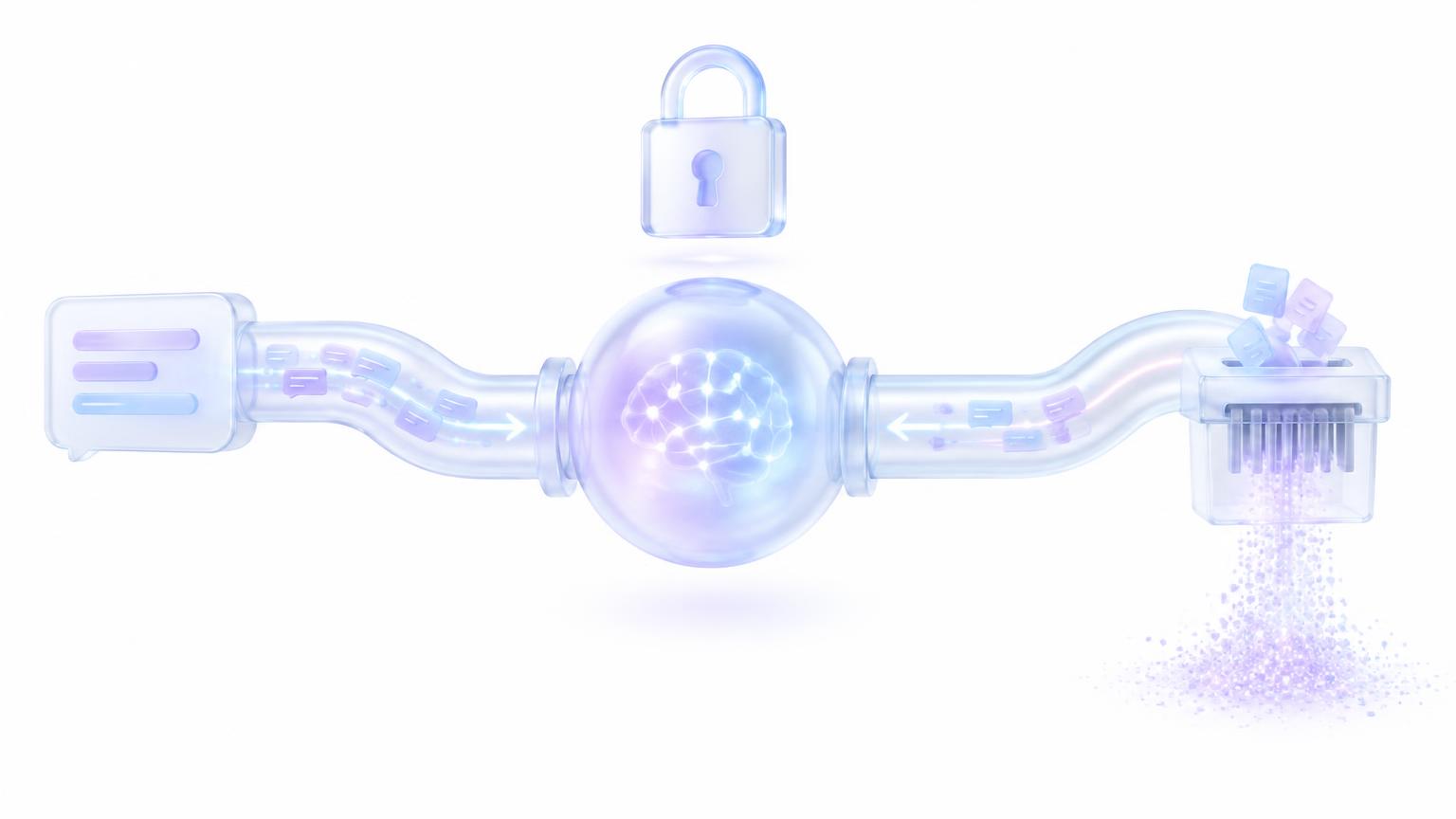
Most consumer AI products keep your prompts — sometimes for 30 days of abuse monitoring, sometimes indefinitely for training. With ZDR:- Your prompts and files are never used to train any model.
- The provider keeps no copy of the prompt or answer after the request completes.
- A breach at a model provider cannot expose conversations that were never stored.
How Aura enforces it
1
Every request carries a deny flag
Each AI call is sent with a strict data collection: deny policy. Providers that would store or train on data are excluded from routing entirely.
2
Only ZDR endpoints are eligible
If a model has no ZDR-compliant endpoint, Aura does not send private traffic to it and uses a compliant version instead.
3
Receipts per call
Aura records which provider handled each request so compliance can be audited, without the provider storing your prompt.
Where ZDR applies
ZDR covers the AI provider. Your chat history is still saved in your Aura account so you can return to it — you control and can delete it.
ZDR vs. “we don’t train on your data”
Many companies promise not to train on your data but still retain it for weeks. ZDR is stricter: no training and no retention at the model provider.Does ZDR make answers worse?
Does ZDR make answers worse?
No. The same models answer; only storage and training are switched off.
Does prompt caching break ZDR?
Does prompt caching break ZDR?
No. Caches are short-lived, held in memory, scoped to your conversation, and expire automatically. See Prompt caching.